Rim Lathe
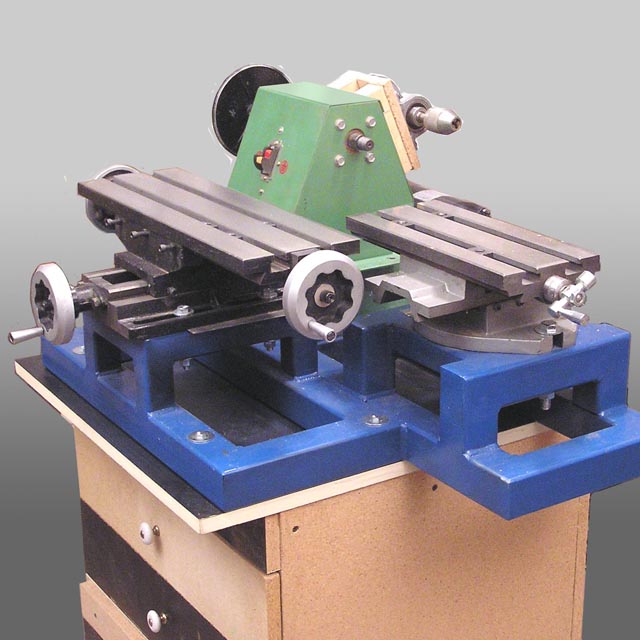 |
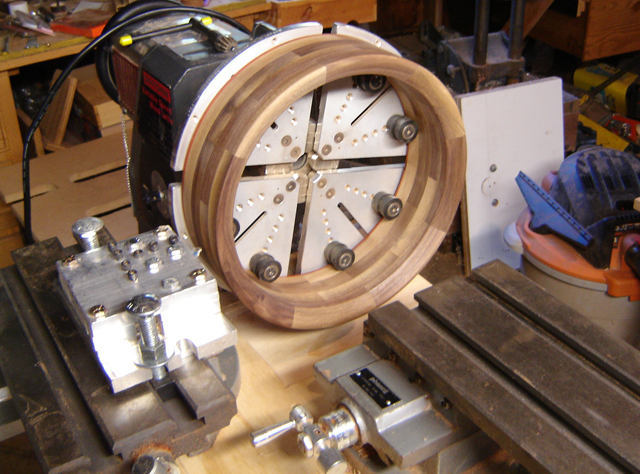
Prototype 1 The rim lathe pictured here represents my first attempt to create a practical, accurate machine. It utilizes a lathe head from an inexpensive Harbor Freight wood lathe constructed of sheet metal. I used two different types of cross slide, both from Enco. This lathe was sold to a local maker in Arizona. Notice the extension that goes past the base on the right cross slide. This was a retrofit because I miscalculated the proper distance from lathe head to cross slide. more... |
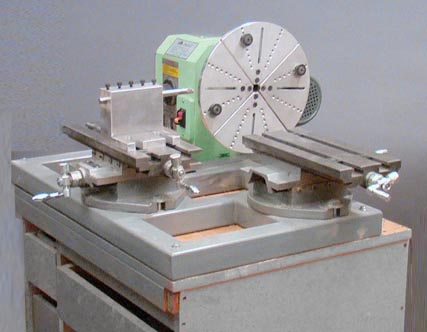 |
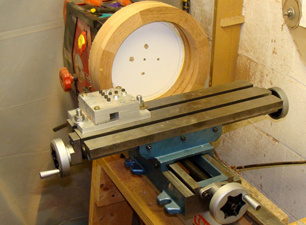
Prototype 2 The lathe head is from a typical Chinese-made lathe. This was a big improvement over Prototype 1 because it is cast iron. It features a variable speed control. I was able to simplify the base design and keep the cross slides on same level as the lathe head. I used two identical Enco cross slides. Several of the rims in my gallery were made with this lathe. My only dissatisfactions with Prototype 2 were a lack of slow speeds and tendency to slow down during heavy cuts. I also tired of turning crank handles endlessly, so I vowed that Prototype 3 would have stepper motors and CNC controls to do the repetitive work for me. |
|
|
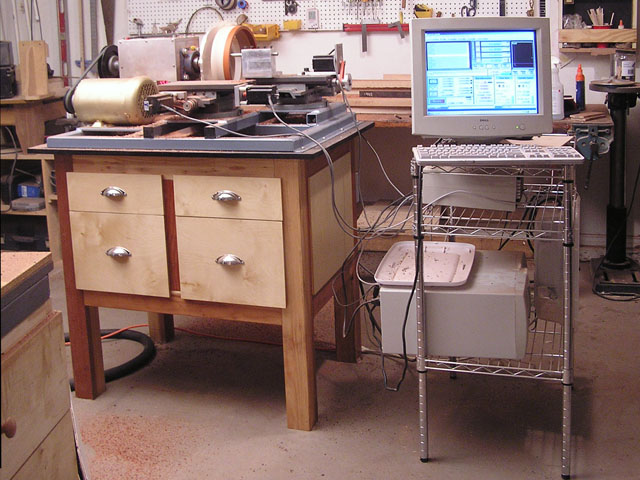
Prototype 3 I had some very aggressive goals for this lathe, including:
I failed to create a lathe that could cut metal, but the CNC controls are really cool. more... |
|
|
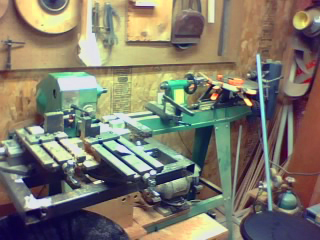
The Dan Pennington Standard Lathe Modification Dan Pennington has engineered a modification to a standard wood lathe so that can support two cross slides. The beauty of this scheme is that it eliminates the need for a custom welded base and workbench or cabinet. |
|
|
The Dan Pennington Single Cross Slide Approach Dan Pennington has engineered an approach that uses a single higher quality cross slide. All the cutting is by boring bar. |
|
|
The Dave Holzer Standard Lathe Modification Dave Holzer has made some very clever modifications to a standard lathe. See More pictures on Dave's MySpace page. |
|
|
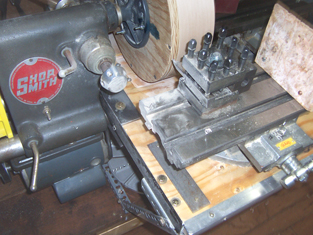
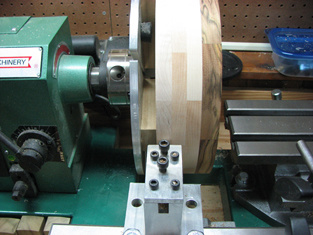
The Jeff Kramer ShopSmith Modification Jeff Kramer created an innovative way to use a ShopSmith for making rims. |
|
|
The Frank Rotella Classic Build Frank Rotella built this lathe in the classic way, combining and imported lathe head with a welded base. He went one step further and added a heel cutting jig. |